

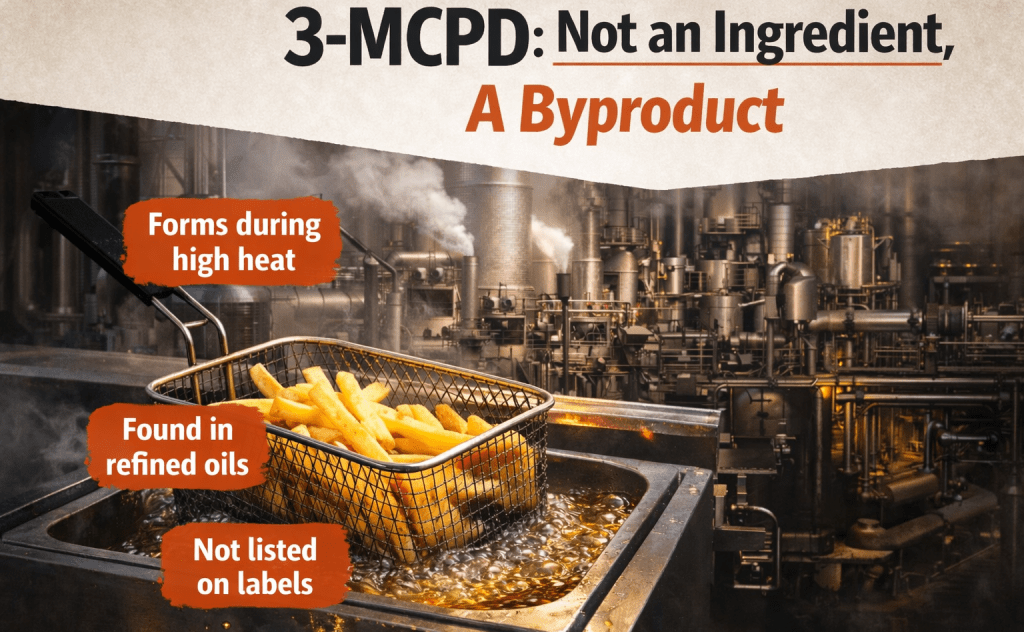
What Is 3-MCPD?
3-MCPD is not an ingredient.
It’s a chemical byproduct that can form during high-heat food processing, especially when fats, salt, and chlorine are involved. It’s most often found in highly processed foods and refined oils.
How 3-MCPD Forms
– Happens during high-temperature oil refining
– Forms when fats react with chlorine or salt
– Common during:
— Heating
— Bleaching
— Deodorizing oils
Foods Where It’s Found
– Refined vegetable oils (especially palm oil)
– Soy sauce
– Infant formula
– Baked goods
– Fried and processed foods
– Acid-hydrolyzed vegetable proteins
– Small amounts have even been found in breast milk
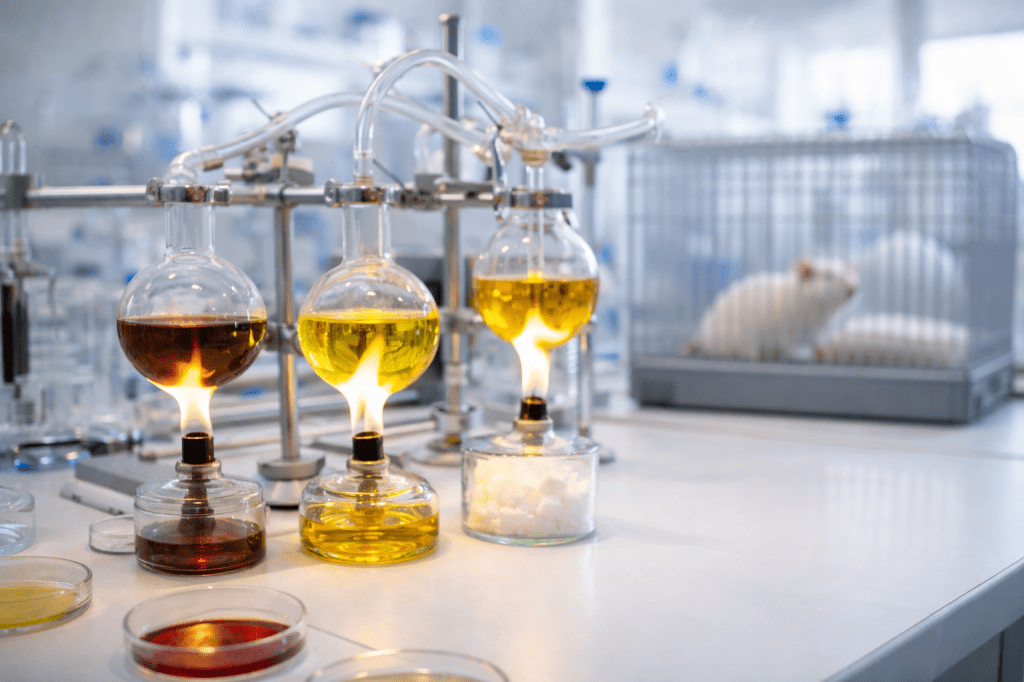
3-MCPD Esters (Important!)
– Often found as 3-MCPD esters (3-MCPDE) in oils
– These turn into 3-MCPD inside the body after eating
– This is why refined oils are a major concern
Health Concerns
Animal studies show damage to:
— Kidneys
— Male reproductive organs
– Considered a possible cancer risk in humans
– Infants are at higher risk due to formula and baby food exposure
Regulations & Safety
– Many countries set legal limits for 3-MCPD
– Europe has stricter limits than the U.S. for some foods
– Ongoing research focuses on reducing levels in food

How to Reduce Exposure
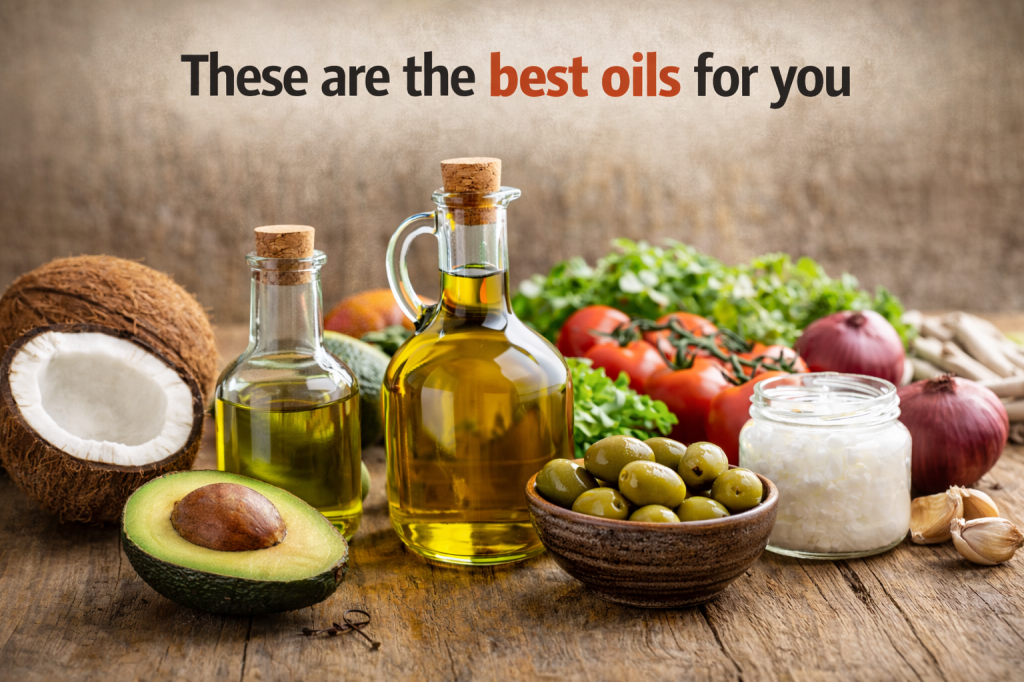
– Choose virgin or unrefined oils
(olive, avocado, coconut — not toasted sesame)
– Limit fried and ultra-processed foods
– Be cautious with heavily refined products
Key Takeaway
– Stick to Advocado, Extra Virgin Olive Oil and Coconut oil
– 3-MCPD is not added to food. It forms during intense processing
– Its presence in refined oils and heat-treated foods is a growing food-safety concern and dangerous like other cancer causing items in oils
Andrea Clinton, Blogger

